
Cooling Tower Cleaning
Safety King provides cooling tower cleaning for commercial and industrial facilities throughout Southeast Michigan. Service is planned around tower condition, access, facility operations, shutdown requirements, and the defined cleaning scope.
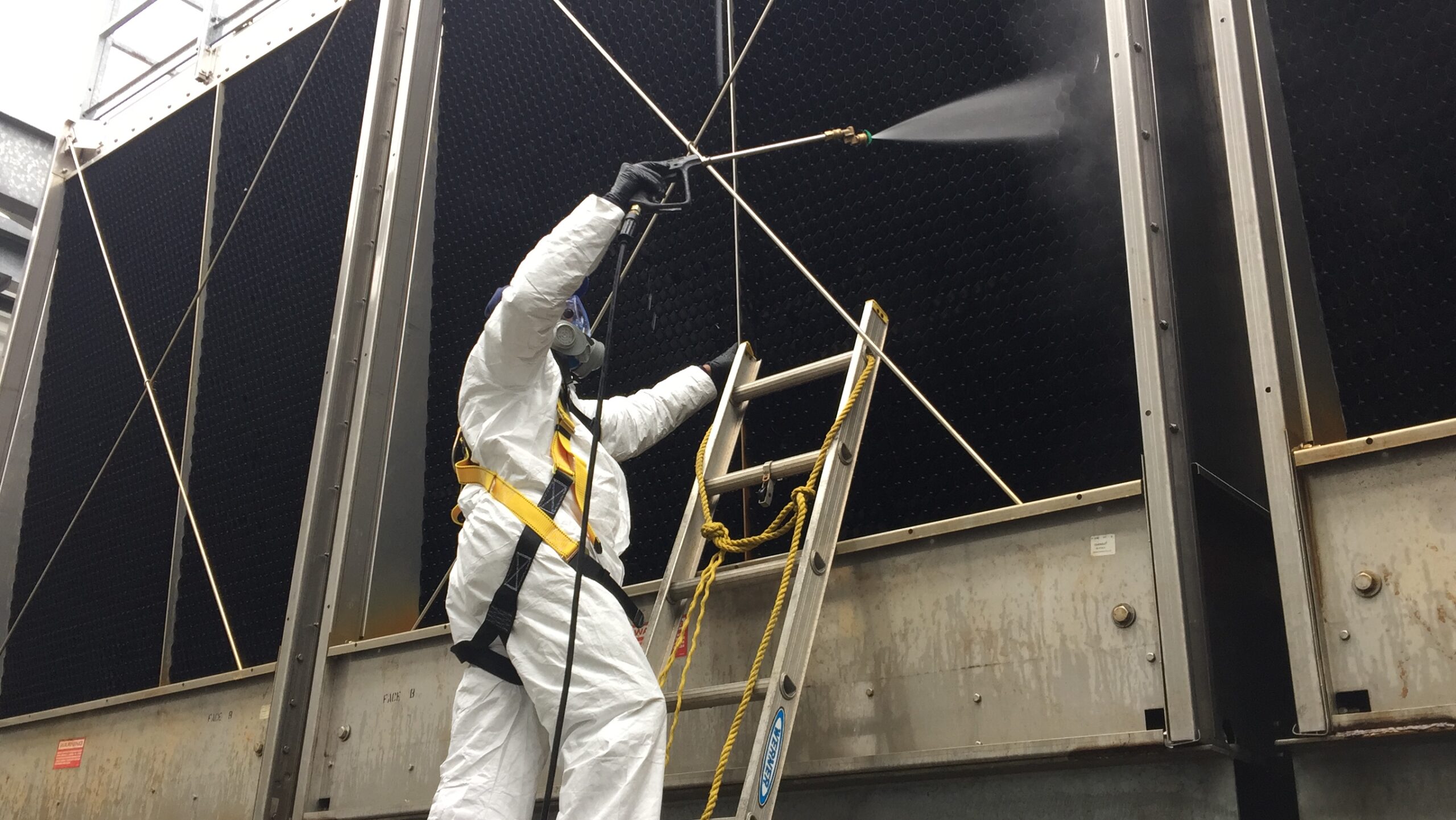
Cooling Tower Cleaning for Commercial & Industrial Facilities
Cooling towers can accumulate sludge, sediment, scale, algae, organic material, and debris during operation. Cleaning can be incorporated into facility maintenance before seasonal startup, after months of operation, or during shutdown planning.
The appropriate cleaning scope depends on the tower, its condition, what components can be accessed, and the requirements of the facility.
- Commercial Buildings
- Manufacturing Plants
- Industrial Facilities
- Property-Managed Buildings
- Schools
- Hotels
- Healthcare Facilities
- Process-Cooling Facilities
When Might Cooling Tower Cleaning Be Needed?
Cooling tower cleaning may be considered when visible conditions, seasonal maintenance planning, or operating concerns indicate that accumulated material should be removed.
Sludge or Sediment
Accumulated material may collect in the basin or sump during operation.
Scale or Algae Buildup
Accessible cooling tower surfaces may develop visible scale, algae, or other buildup.
Standing Debris
Outdoor equipment can accumulate leaves, dirt, organic material, and other debris.
Dirty Strainers
Accessible strainers may require cleaning as part of the defined service scope.
Water-Flow Concerns
Facility teams may investigate cleaning when buildup or debris is associated with reduced-flow concerns.
Startup or Shutdown Maintenance
Cleaning may be incorporated into spring startup or fall shutdown planning.
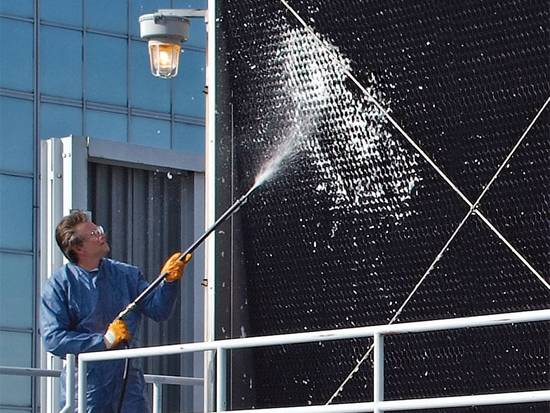
What Can Cooling Tower Cleaning Include?
Cooling towers differ in design, condition, and accessibility. Safety King's scope is defined around the equipment and components included for the individual facility.
- Basin and sump cleaning
- Removal of sludge, sediment, scale, algae, and debris
- Cleaning accessible cooling tower surfaces
- Cleaning accessible strainers and nozzles when included
- Cleaning accessible fill material and drift eliminators when included
- Disinfection or biocide treatment when appropriate and included in the service scope
- Documentation for facility records when included
What Determines the Cooling Tower Cleaning Scope?
Cooling tower cleaning is not a one-size-fits-all service. Several conditions affect what can be cleaned and how the work should be scheduled.
Tower Design
Tower configuration affects component access and the areas that can be included in the cleaning scope.
Type of Buildup
Sludge, sediment, scale, algae, organic material, and debris may require different cleaning attention.
Accessible Components
The scope depends in part on what tower surfaces and components can be accessed for cleaning.
System Status
Cleaning may need to be coordinated around whether the tower is operating, offline, starting up, or being shut down.
Maintenance Requirements
Facility procedures, maintenance schedules, and other planned work can affect timing and access.
Other Service Providers
Water-treatment, HVAC, maintenance, or engineering work may need to be coordinated with the cleaning schedule.
What Should the Facility Team Be Ready to Discuss?
Providing basic operating and access information helps define the cleaning scope before the work is scheduled.
- Tower Type & Configuration What equipment needs cleaning and how it is configured.
- Current Condition Known sludge, sediment, scale, algae, debris, or other visible buildup.
- Access Which areas and components can be reached safely for cleaning.
- Operating Status Whether the system will be operating, offline, starting up, or shutting down.
- Water Treatment Coordination Whether a water-treatment provider is involved before, during, or after the work.
- Maintenance Schedule Other HVAC, mechanical, or facility work that may affect access or timing.
Who Can Safety King Coordinate With?
Cooling tower cleaning often intersects with broader facility maintenance. The work may need to be coordinated with the people responsible for building operations, mechanical equipment, and water treatment.
Facility Managers
For access, operating schedules, shutdown planning, and overall facility coordination.
Building Engineers
For equipment access, operating conditions, and mechanical-system coordination.
HVAC & Maintenance Teams
For work being performed before startup, during maintenance, or at shutdown.
Water Treatment Providers
For coordination where cleaning intersects with the facility's water-treatment schedule or program.
Cooling Tower Cleaning Is One Part of Facility Water Management
Cooling tower cleaning can support facility maintenance and water management planning, but the cleaning service does not replace the other professional functions that may be required for the system.
- Legionella testing
- Ongoing water treatment
- Mechanical repair
- Engineering review
- Manufacturer-required maintenance
- A complete water management program
Testing, treatment, compliance decisions, and specialized technical work should be handled by the appropriate qualified professionals.
When Is Cooling Tower Cleaning Typically Scheduled?
Michigan facilities often coordinate cooling tower cleaning around seasonal operation and planned maintenance rather than choosing an arbitrary calendar date.
Spring Preparation
Cleaning may be scheduled before peak cooling demand as part of startup preparation.
Condition-Based Maintenance
Facilities may address accumulated sediment, debris, buildup, or other maintenance concerns after periods of operation.
Fall Shutdown Planning
Cleaning can also be coordinated with end-of-season shutdown and other scheduled maintenance work.
Cooling Tower Cleaning FAQs
What is cooling tower cleaning?
Cooling tower cleaning removes sediment, sludge, scale, algae, biological buildup, and debris from cooling tower systems. Depending on the system and service scope, it may include basin cleaning, sump cleaning, accessible surface cleaning, and debris removal from accessible components.
When is the best time to schedule cooling tower cleaning in Michigan?
In Michigan, cooling tower cleaning is often planned in the spring before peak cooling season or in the fall after months of operation. Timing depends on the system, facility schedule, water treatment plan, maintenance needs, and weather conditions.
What can Safety King help clean?
Safety King can help with basin and sump cleaning, sludge and sediment removal, scale and algae buildup, debris removal, accessible surface cleaning, and cleaning accessible strainers, nozzles, fill material, and drift eliminators when included in the scope.
Does every cooling tower cleaning include the same components?
No. The cleaning scope depends on the tower design, condition, accessibility, operating status, and facility requirements. The components included should be defined before the work begins.
Does cooling tower cleaning replace water treatment or Legionella testing?
No. Cooling tower cleaning does not replace a full water management program, Legionella testing, ongoing water treatment, mechanical repair, engineering review, or manufacturer-required maintenance.
Who usually schedules cooling tower cleaning?
Cooling tower cleaning is often scheduled by facility managers, property managers, building engineers, maintenance directors, plant managers, building owners, commercial HVAC contractors, water treatment providers, or other team members responsible for commercial or industrial building systems.
Can cooling tower cleaning be coordinated with other facility work?
Yes. Cleaning can be planned around access, system operation, shutdown requirements, water treatment, HVAC work, and other facility maintenance schedules.
Plan Cooling Tower Cleaning for Your Facility
Safety King serves commercial and industrial facilities throughout Southeast Michigan, including Macomb, Oakland, Wayne, Genesee, Lapeer, and St. Clair counties and the greater Detroit area. Contact the team to discuss the tower, current condition, access, operating status, and proposed cleaning scope.