
air duct cleaning process
Safety King’s air duct cleaning process is designed to clean accessible ductwork carefully, protect the property, and help customers understand what was found during service. The process may vary based on the home or building, duct layout, accessibility, system condition, and service being performed. The goal is to use the right equipment, trained technicians, and source removal methods to remove dust, debris, pet hair, lint, and buildup from accessible duct surfaces.
What to Expect During Air Duct Cleaning
Safety King technicians arrive with professional duct cleaning equipment and begin by reviewing the home or building. This gives customers a chance to share concerns, ask questions, and understand what will happen during the appointment.
A typical air duct cleaning appointment may include property protection, vacuum setup, access to the duct system, cleaning supply and return ductwork, reviewing related system areas, documenting visible conditions, and cleaning up before the team leaves.
Customers do not need to know every part of the duct system before scheduling. Safety King can explain what access is needed and what the process may involve based on the property.
How Do I Prepare For Air Duct Cleaning?
Before your appointment, customers can help by making sure technicians can access vents, returns, the furnace or air handler, and any mechanical areas involved in the service. Small furniture, rugs, or personal items near vents may need to be moved.
Customers should secure pets, share any concerns with the technician team, and mention recent remodeling, odors, dust concerns, airflow issues, or rooms that seem different from the rest of the home.
Safety King can explain what access is needed based on the home, duct layout, and service being performed.
Will Air Duct Cleaning Make a Mess?
Safety King’s process is designed to help control dust and debris during service. The duct system is placed under negative pressure, and loosened material is pulled toward the vacuum equipment.
Technicians also take steps to protect the property during setup and clean up the work area before leaving.
The exact setup can vary based on the home or building, duct access, equipment placement, and service being performed.
Do I Need to Leave During Air Duct Cleaning?
In most cases, customers do not need to leave during air duct cleaning.
There will be normal service activity, equipment setup,
technician movement through the home or building, and noise from vacuum equipment or compressed air tools. Customers who work from home, have pets, or have young children may want to plan around the appointment.
The Safety King team can explain what to expect before service begins.
Will Technicians Need Access to Every Room?
Technicians may need access to rooms with supply vents, return vents, registers, the furnace or air handler, basement, attic, crawl space, mechanical room, or other areas connected to the duct system.
Access needs vary by property. During the walk-through, Safety King can explain which areas are needed for the service being performed.
What Happens If Part of the Ductwork Is Hard to Access?
Not every duct system can be accessed the same way.
Finished basements, limited crawl spaces, tight mechanical areas, older duct layouts, additions, and building design can affect what the technician team can reach.
When part of the ductwork is difficult to access, Safety King can explain what can be cleaned, what may require a different approach, and whether another service or inspection should be considered.
Why the Cleaning Process Matters
A good air duct cleaning process depends on more than basic tools. It requires the right equipment, trained technicians, proper setup, access to the duct system, and a clear plan for removing material from accessible duct surfaces.
Customers should be careful with very low-price duct cleaning offers that do not clearly explain what is included, what equipment will be used, or how the system will be cleaned.
Safety King’s process is built around duct cleaning, not a quick surface-level service.
Is This Process the Same for Every Property?
No. Every home and building is different.
The cleaning process may vary based on duct layout, number of systems, accessibility, system age, building size, type of buildup, and whether the project is residential, commercial, or industrial.
Residential air duct cleaning often involves room-by-room access, vents, returns, the furnace or air handler, and home protection steps. Commercial and industrial duct cleaning may require additional planning around building access, scheduling, equipment placement, facility use, and project coordination.
Safety King’s Air Duct Cleaning Process
1. Arrival and Pre-Cleaning Walk-Through
Uniformed technicians arrive at the property and begin with a walk-through of the home or building. During this step, customers can point out specific concerns such as dust, odors, visible debris, airflow issues, recent remodeling, or rooms that seem to collect dust quickly. The walk-through helps the technician team understand the property, review access, and answer questions before cleaning begins.2. Professional Vacuum Equipment
Safety King uses professional duct cleaning equipment, including powerful vacuum trucks and portable equipment when needed. The vacuum truck stays outside during the appointment. Vacuum hoses are run from the truck to the duct system, which means a door or window may need to remain open during setup and cleaning. Portable equipment may be used when the property layout, building access, or cleaning situation requires a different setup.3. Property Protection and Setup
Technicians take steps to protect the property during setup. This may include shoe covers, drop cloths, corner guards, and careful placement of vacuum lines and equipment. The goal is to help protect floors, furnishings, walls, and corners while the team moves equipment through the home or building.4. Vacuum Connection and Access Openings
Safety King connects vacuum equipment to the duct system so the system can be placed under negative pressure. Access openings may be created when needed so the vacuum equipment and cleaning tools can reach the duct system properly. These openings are sealed after cleaning using appropriate access covers or closures. The technician can explain where access is needed and how the openings will be handled before work begins.5. Register and Vent Preparation
Registers may be covered or blocked during cleaning so vacuum pressure can be concentrated in the section of ductwork being cleaned. This step helps control airflow through the system and supports a more focused cleaning process.6. Source Removal Cleaning
Safety King uses source removal methods to loosen dust, debris, pet hair, lint, and buildup from accessible interior duct surfaces. Technicians may use compressed air tools, air nozzles, whips, brushes, and other cleaning tools depending on the duct system and the areas being cleaned. Source removal is intended to loosen material inside the duct system and pull it toward the vacuum equipment so it can be removed from the home or building.7. Supply and Return Duct Cleaning
The technician team works through accessible supply and return ductwork. Supply ducts move heated or cooled air into rooms. Return ducts pull air back toward the HVAC system. Both parts of the duct system can collect dust, debris, pet hair, remodeling particles, and other material over time. The technician can explain what areas are included and what can be accessed based on the system.8. Trunk Line Cleaning
When appropriate and accessible, Safety King may clean trunk lines as part of the duct cleaning process. Because trunk lines are larger areas of the duct system, they may require additional tools or cleaning steps beyond the smaller branch ducts.9. Furnace Blower Cleaning
Cleaning the furnace blower is part of a regular Safety King system cleaning. A dirty blower can push dust right back into freshly cleaned ductwork, so we clean it along with the supply and return lines. Because HVAC systems vary, the technician can explain what parts of the system are included, what can be accessed, and whether any concerns appear to involve HVAC maintenance or repair rather than duct cleaning.10. Photos and Visual Review
When conditions allow, Safety King may use photos to show what was found inside the duct system and what was addressed during cleaning. Photos can help customers better understand visible buildup, debris, duct conditions, and cleaning results. [View Before & After Photos]11. Post-Cleaning Walk-Through
After cleaning, the technician team reviews the work area, answers customer questions, and confirms that equipment and materials have been cleaned up. Access openings are sealed, the system is returned to service, and the team can explain any findings or next steps when appropriate.12. Follow-Up Support
Safety King’s support team may follow up after service to review customer satisfaction and answer additional questions. The goal is to make the process clear from scheduling through completion.What Safety King Cleans In commercial buildings
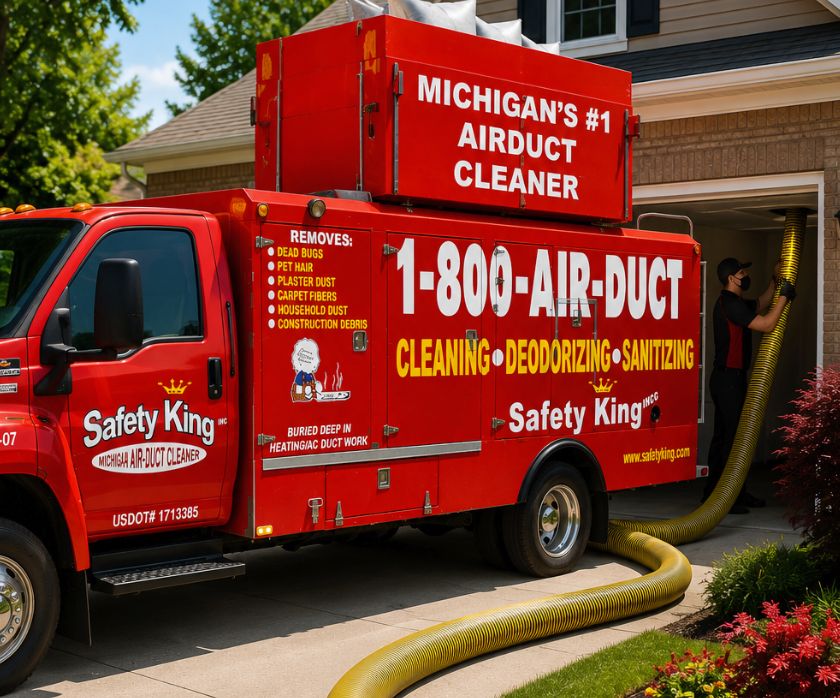
Commercial air duct cleaning focuses on the ductwork connected to a building’s heating, cooling, and air distribution system. Depending on the building layout, system access, and condition of the ductwork, Safety King may clean the following areas:
Supply Ducts
The ducts that deliver heated or cooled air into offices, dining areas, workspaces, rooms, or shared areas.
Return Ducts
The ducts that pull air back into the HVAC system so it can be heated, cooled, filtered, and circulated again.
Registers, Grilles, and Vents
The visible openings where air enters or leaves rooms, offices, hallways, dining areas, and commercial spaces.
Accessible Trunk Lines
Larger duct sections that move air through the main parts of the building.
Accessible Interior Duct Surfaces
Interior duct surfaces that can be reached and cleaned with commercial duct cleaning equipment.
Related HVAC Components
Depending on the system and service, Safety King may also review or clean related accessible components that are part of the air distribution system.
Every commercial building is different. The exact cleaning plan depends on the duct layout, building access, system condition, ceiling height, work areas, and scheduling needs.
Related Air Duct Cleaning Services
Residential Air Duct Cleaning
Learn more about air duct cleaning for homes throughout Southeast Michigan.
Commercial Air Duct Cleaning
Learn more about duct cleaning for offices, buildings, managed spaces, and commercial facilities.
Industrial Air Duct Cleaning
Learn more about duct cleaning for larger facilities, production spaces, and industrial buildings.
Air Duct System Inspection
Learn more about duct cleaning for larger facilities, production spaces, and industrial buildings.
Safety King has served Michigan homeowners and businesses since 1969
The company focuses on ductwork, dryer vents, and related air movement systems.
Air Duct Cleaning Service Areas
Safety King is based in Utica, MI, and provides Air Duct Cleaning throughout Southeast Michigan. Safety King serves homeowners in:
FAQs About The air duct cleaning process
These FAQs help customers understand how Safety King cleans air ducts and what to expect before, during, and after service.
How does Safety King clean air ducts?
Safety King uses professional vacuum equipment and source removal methods to loosen and remove dust, debris, pet hair, lint, and buildup from accessible duct surfaces.
What does source removal mean?
Source removal means the cleaning process is designed to loosen material from inside the duct system and remove it through vacuum equipment, rather than simply moving debris around.
Do I need to prepare before air duct cleaning?
Before your appointment, make sure technicians can access vents, returns, the furnace or air handler, and any mechanical areas involved in the service. Small items, rugs, or furniture near vents may need to be moved.
Customers should also secure pets and share any concerns with the technician team before cleaning begins.
Will the vacuum truck stay outside?
Yes. When truck-mounted vacuum equipment is used, the vacuum truck stays outside. Vacuum hoses are run from the truck to the duct system, so a door or window may need to remain open during part of the appointment.
Will air duct cleaning make a mess?
Safety King takes steps to protect the property during setup and uses vacuum equipment to help pull loosened dust and debris out of the duct system. Technicians also clean up the work area before leaving.
Do I need to leave during the appointment?
In most cases, customers do not need to leave during air duct cleaning. There may be noise from equipment and technician movement through the home or building, so customers may want to plan around the appointment.
Will technicians need access to every room?
Technicians may need access to rooms with vents or returns, along with the furnace or air handler, basement, attic, crawl space, or mechanical areas depending on the duct system and service being performed.
What happens if part of my ductwork is hard to access?
The technician can review access limitations and explain what can be cleaned, what may require a different approach, and whether another service or inspection should be considered.
Are access openings sealed after cleaning?
Yes. When access openings are created for the cleaning process, they are sealed after service using appropriate access covers or closures.
Does Safety King clean both supply and return ducts?
Safety King’s air duct cleaning may include accessible supply ducts, return ducts, registers, vents, trunk lines, and related system areas depending on the service and system access.
H3 Does Safety King clean the furnace blower?
Cleaning the furnace blower is part of a regular Safety King system cleaning. A dirty blower can push dust right back into freshly cleaned ductwork, so we clean it along with the supply and return lines.
Will I see before-and-after photos?
When conditions allow, Safety King may use photos to help show what was found inside the duct system and what was addressed during service.
How long does air duct cleaning take?
The time needed depends on the size of the home or building, number of systems, duct layout, accessibility, condition of the ductwork, and number of technicians on the project.
How long before I need air duct cleaning again?
Three to five years is typical, but it depends on your needs and the specific conditions in your home or building. Pets, allergies, remodeling or construction, smoke exposure, water damage, or visible debris can mean cleaning is needed sooner.
Is the air duct cleaning process different for commercial buildings?
Yes. Commercial and industrial duct cleaning may require additional planning around building access, equipment placement, scheduling, facility use, safety requirements, and project coordination.
schedule air duct cleaning
Have questions about what happens during air duct cleaning? Safety King can help you understand the process and choose the right next step for your home, business, or building.