
Why Changing Your Furnace Filter Matters
Your furnace or HVAC filter is a small part of the system, but it plays an important role in protecting the equipment and maintaining proper airflow.
As air returns to the HVAC system, the filter captures particles before they reach the blower, coil, and other components. When the filter becomes heavily loaded with dust and debris, airflow through the system can become restricted.
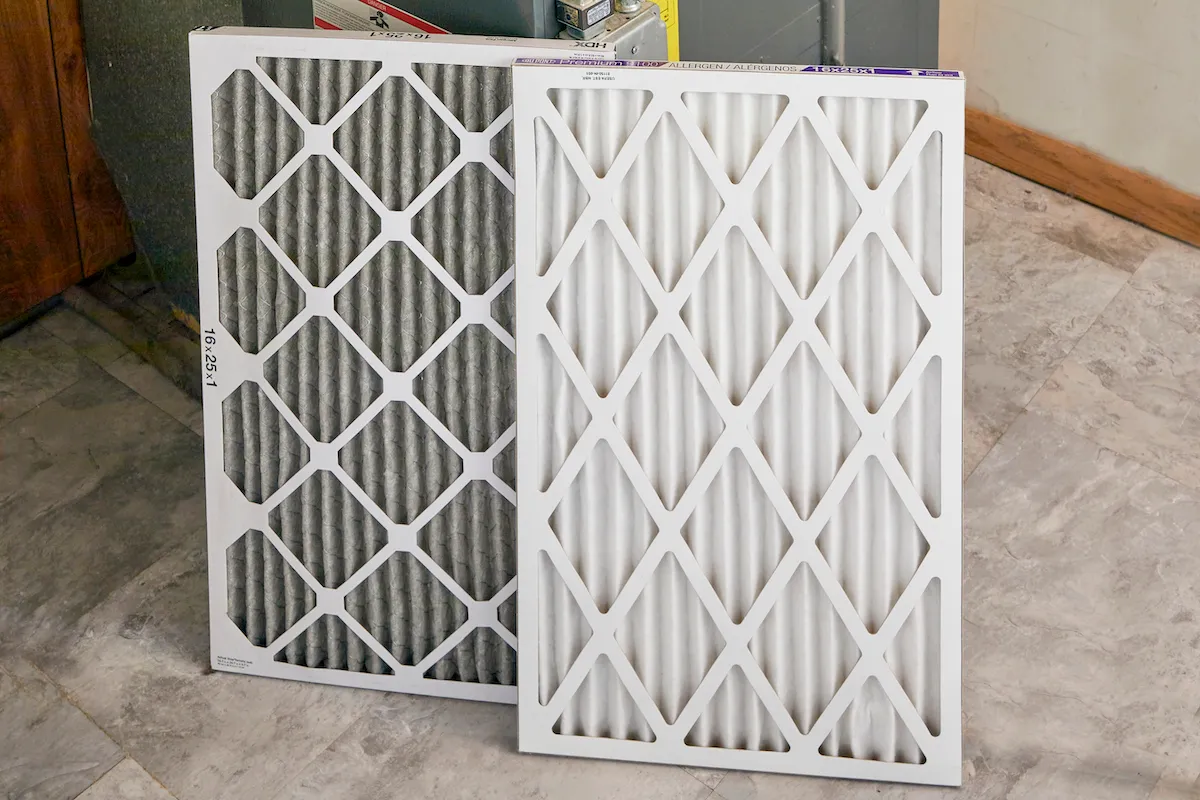
A furnace or HVAC filter captures particles from return air before they reach system components.
What Does a Furnace Filter Actually Do?
The primary job of the filter is to capture particles moving through the return air before they reach HVAC equipment.
Depending on the filter, it may capture material such as:
- Household dust
- Pet hair and dander
- Fibers
- Pollen
- Other airborne particles
The amount and type of material captured depends on the filter, the HVAC system, and conditions inside the home.
Why a Dirty Filter Can Become a Problem
As a filter collects debris, resistance to airflow can increase.
If the filter becomes excessively dirty, the HVAC system may have more difficulty moving air through it.
Possible signs of a heavily loaded or restrictive filter can include:
- Reduced airflow from registers
- Longer heating or cooling cycles
- A visibly dirty filter surface
- Increased dust around the return area
- HVAC performance that changes after the filter becomes loaded
These symptoms can have other causes, so the filter should be treated as one part of the system rather than an automatic diagnosis.
How Often Should You Change a Furnace Filter?
There is no single replacement interval that applies to every home.
The right schedule depends on factors such as:
- Filter type and thickness
- Manufacturer recommendations
- Number of people in the home
- Pets
- Household dust levels
- Remodeling or construction
- How frequently the HVAC system operates
During periods of heavy heating or cooling use, checking the filter regularly is a good habit.
Replace it when its condition or the manufacturer’s instructions indicate that it is time.
How to Change a Furnace or HVAC Filter
For many residential systems, changing the filter is straightforward.
Turn the HVAC System Off
Turn the system off before removing the filter so air is not being pulled through the opening while you work.
Locate the Filter
The filter may be located near the return duct, inside a filter cabinet, or near the blower or air handler.
Check the Filter Size
Filter dimensions are typically printed on the frame. Use the correct size specified for the system.
Check the Airflow Arrow
Most disposable filters have an arrow showing the direction of airflow. The arrow should point toward the HVAC equipment, following the direction air moves through the return side of the system.
Install the Filter and Restart the System
Make sure the filter sits correctly in its slot or cabinet, then restart the HVAC system.
Does a Better Filter Always Mean Better Performance?
Not necessarily.
Filters vary in how much resistance they create as air passes through them.
A filter that is too restrictive for the HVAC system can reduce airflow even when it is relatively clean.
The appropriate filter should match the system’s design and manufacturer recommendations. If you are unsure which filter is appropriate, an HVAC professional can help determine what the system is designed to use.
Does Changing the Filter Clean the Air Ducts?
No.
The filter and the duct system serve different purposes.
Replacing a filter does not remove material that is already inside the ductwork, blower compartment, coil area, or other HVAC components.
At the same time, the presence of ordinary household dust inside ductwork does not automatically mean the system needs professional cleaning.
Filter Maintenance and Duct Cleaning Are Different Decisions
Air duct cleaning should be based on the condition of the system and what is actually found during an evaluation.
When Should the Duct System Be Evaluated?
A duct system may be worth inspecting when there is evidence such as:
- Significant visible accumulation inside accessible ductwork
- Construction or remodeling debris
- Foreign material inside the ducts
- Heavy pet hair or other debris
- Long periods without an evaluation
- A specific HVAC or airflow concern that needs investigation
The filter is one maintenance item. The condition of the rest of the system should be evaluated separately.
Frequently Asked Questions
How often should I check my furnace filter?
Which direction should the arrow on a furnace filter point?
Can a dirty furnace filter reduce airflow?
Does changing the furnace filter mean I do not need air duct cleaning?
Keep the Filter and the Rest of the System in Perspective
Regular filter maintenance is one of the simplest things a homeowner can do for an HVAC system. If you are seeing significant debris inside the ductwork or have concerns about the condition of the system beyond the filter, Safety King can evaluate whether professional air duct cleaning is appropriate.